Managing Acute Pulmonary Edema with NIPPV: Get It Wrong, and Your Best Move Might Be a Clean Kill
Same Wet Lungs, Opposite Treatment: The Pulmonary Edema Trap That Catches Good Clinicians
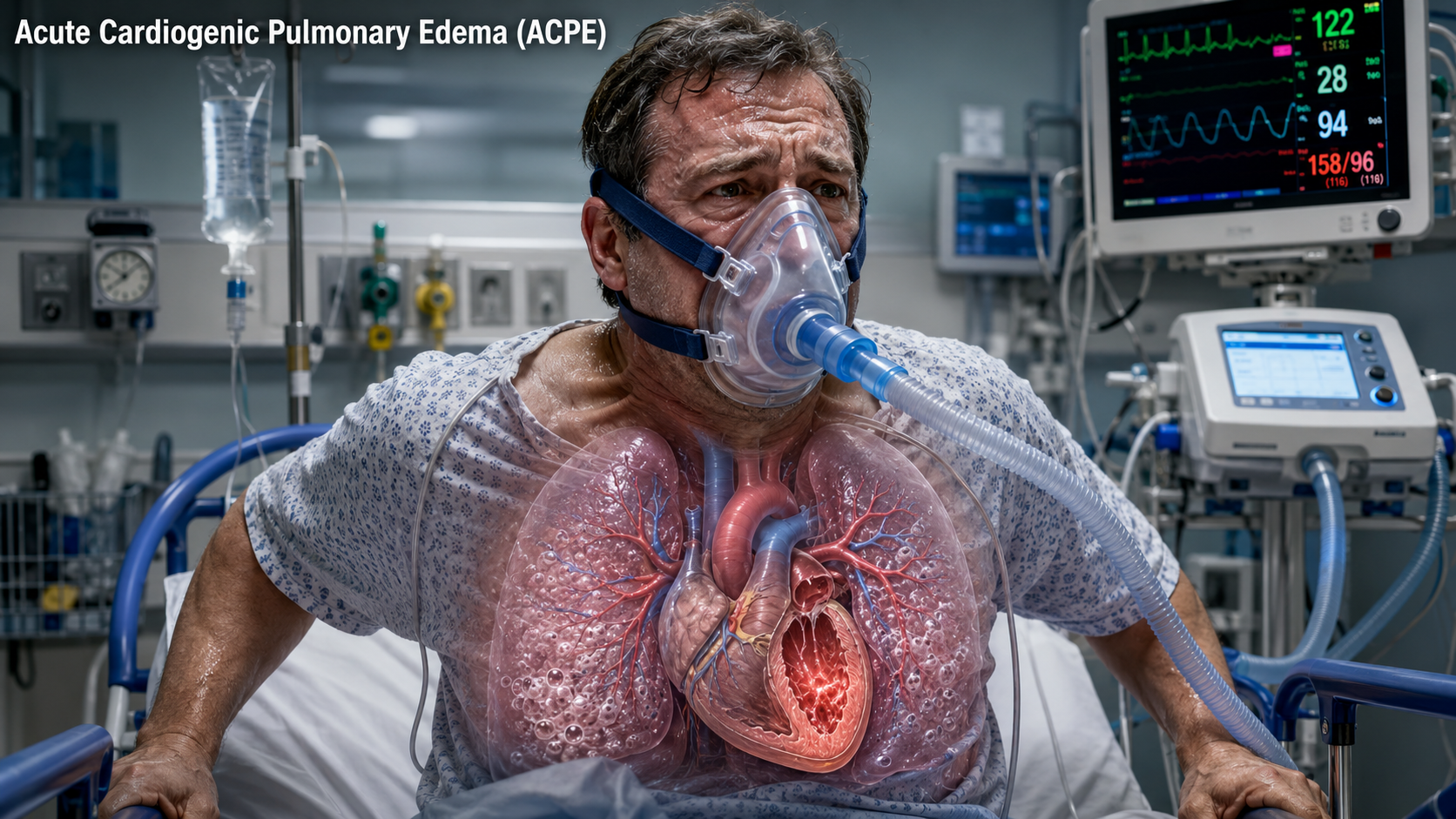
Two patients hit your resus bay minutes apart. Both are drowning. Both are gasping, diaphoretic, coughing up pink froth. You put the probe on their chests and see the same thing — B-lines lighting up the screen like a snowstorm. Crackles everywhere. Same story on the monitor: oxygen saturation in the toilet.
If you stopped there, you'd call both cases "acute cardiogenic pulmonary edema," reach for the same playbook, and treat them identically.
And on one of those patients, that decision could be fatal.
Here's the uncomfortable truth: pulmonary edema isn't a diagnosis. It's a symptom. It tells you fluid has moved into the lungs because pressures on the left side of the heart climbed — but it says nothing about why those pressures climbed, or whether the rest of the body is still getting blood. Two patients can have identical lungs and completely opposite circulations. Treat the lungs and ignore the circulation, and you can turn a save into a code.
The tell is in the blood pressure — and the skin
Look past the lungs. Patient one is at 230/120, wired, warm, and terrified. Patient two is at 78/48, cool, mottled, and slipping into confusion. Same chest. Totally different emergencies.
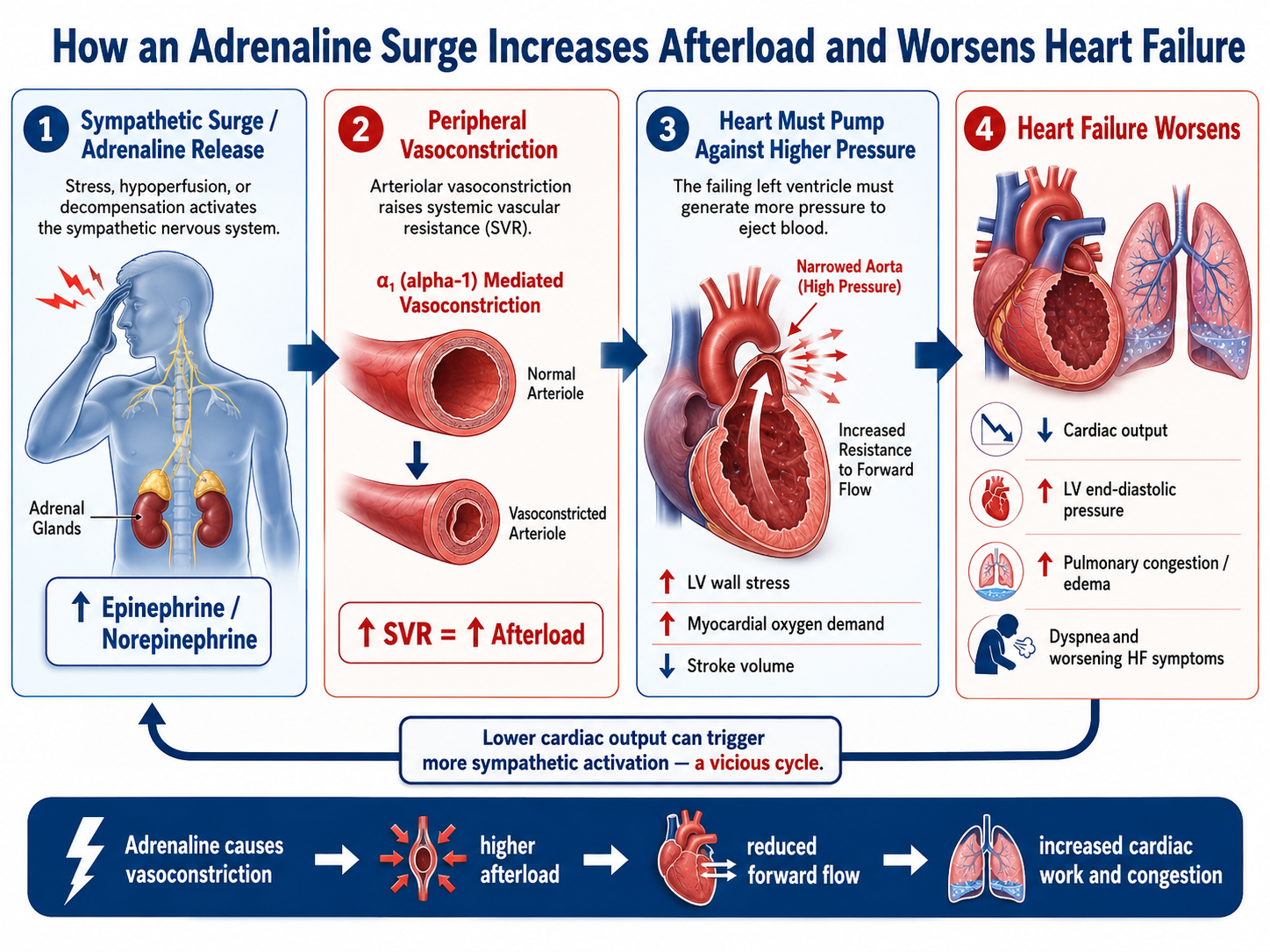
Patient one has SCAPE — sympathetic crashing acute pulmonary edema. This is a pressure problem. A sudden sympathetic surge slams the arteries shut, spikes afterload, and squeezes blood out of the veins into the chest. The lungs flood in minutes. And here's the part that rewrites the reflex to grab furosemide: most of these patients aren't carrying liters of extra fluid — the fluid they have has just been violently redistributed into the lungs. In one randomized trial of SCAPE patients, 40% were actually euvolemic or even hypovolemic.
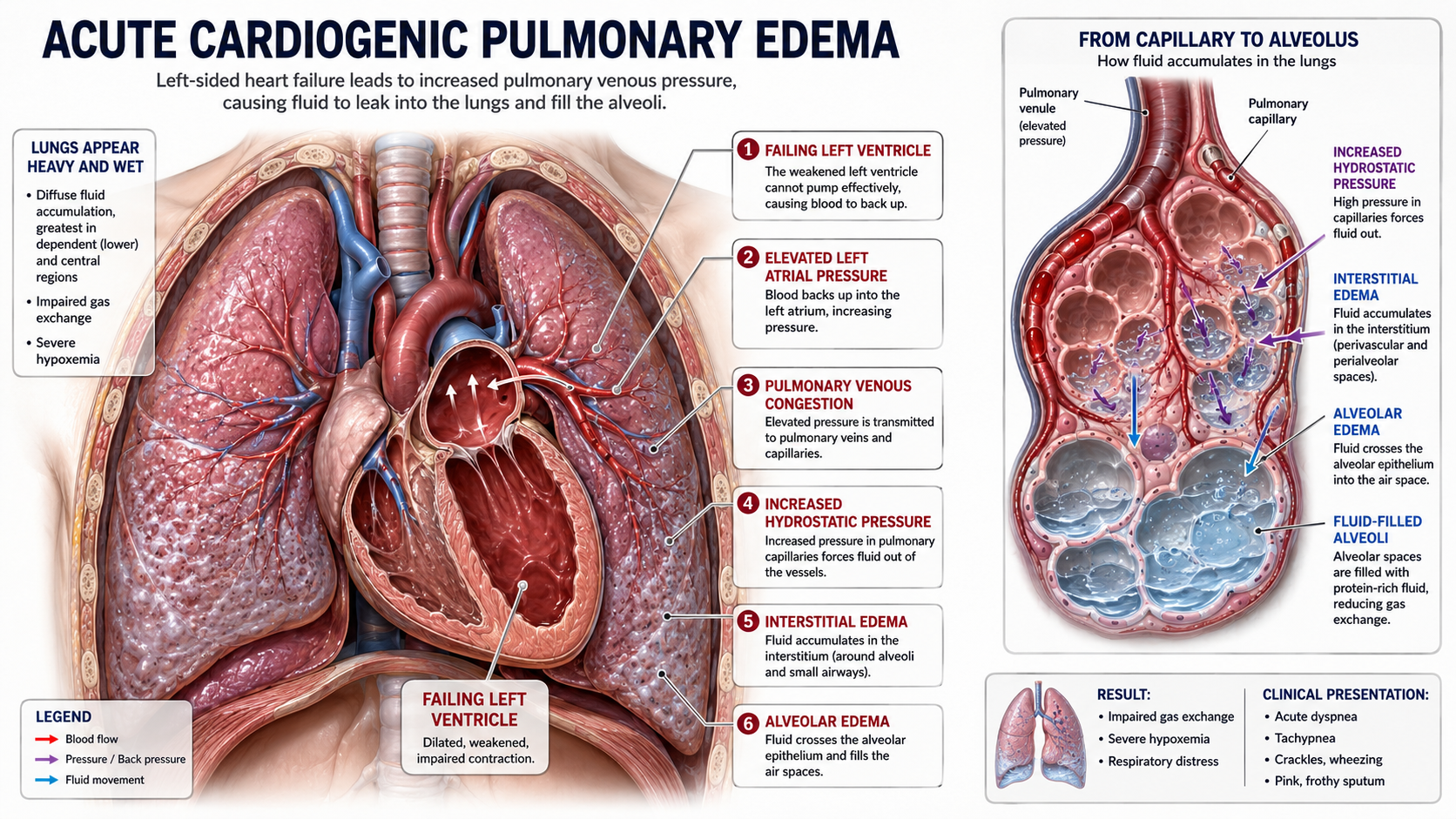
Patient two has cardiogenic shock. This is a pump problem. The heart can't push enough blood forward to keep the organs alive. Yes, the lungs are wet — but wet lungs are the least of this patient's worries. The brain, kidneys, and heart muscle itself are starving. Oxygen saturation is not your endpoint here. Perfusion is.
NIV is your first move — and it's doing far more than you think
Before you reach for a single drug in SCAPE, reach for the mask.
Here's the mistake that quietly limits people: they think of CPAP and BiPAP as fancy oxygen. They're not. In SCAPE, non-invasive ventilation is a hemodynamic intervention you deliver through a mask — arguably the single most powerful early move you have.
Think about what your SCAPE patient is doing to themselves. Each frantic, forceful breath generates violently negative pressure inside the chest. That does two bad things at once: it drags more blood into an already-flooded thorax, and it makes the left ventricle work harder to eject against that pressure. The patient's own respiratory effort is feeding the fire.
Positive pressure flips every part of that. It splints open collapsed alveoli and fixes the oxygenation problem. It slashes the work of breathing, which shuts down the sympathetic feedback loop driving the whole crisis. And — this is the part that matters most — it drops the pressure the left ventricle has to pump against and reduces the volume slamming back into the heart. You are unloading a failing ventricle without an IV. That's why the most consistent, best-supported benefit of NIV in this setting is a reduced need for intubation. You are literally keeping tubes out of throats.
Which mode? Reach for CPAP when the job is recruitment, oxygenation, and unloading — which is most SCAPE. Reach for BiPAP when the patient also needs help moving air: they're tiring out, going hypercapnic, or can't generate a decent tidal volume on their own. Either way, the rule is the same: early and aggressive beats late and timid. Minutes matter. NIV started fast, paired with rapid afterload reduction, is what turns a SCAPE patient around before they ever crash to a tube.
Why the same tools save one patient and threaten the other
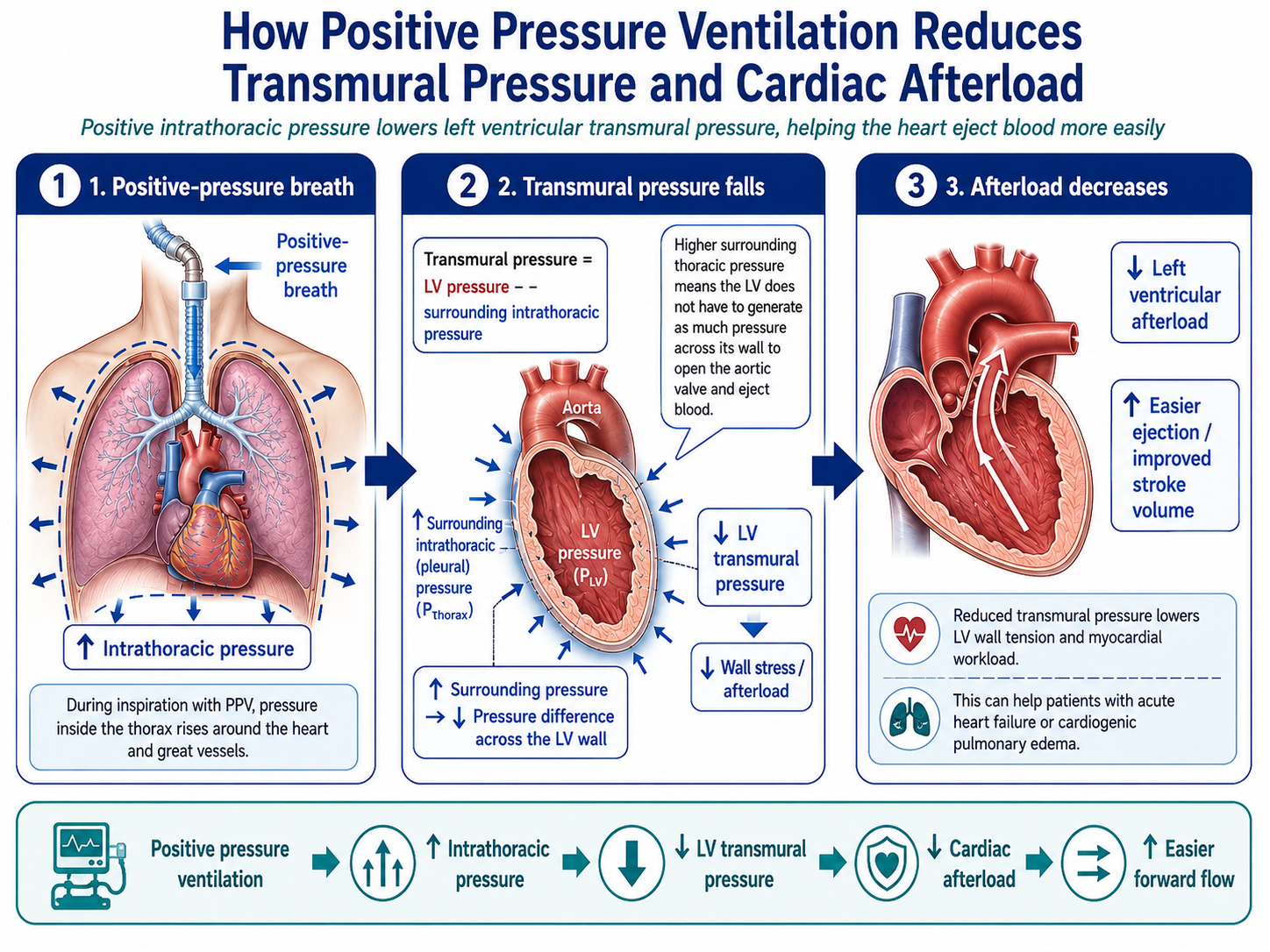
This is where the distinction stops being academic.
In SCAPE, nitroglycerin is your partner to the mask — and it belongs pushed boldly, not timidly. Higher-dose nitro dilates arteries, drops afterload, and breaks the vicious cycle; recent trials suggest an aggressive, protocolized strategy resolves symptoms faster and keeps more patients off the ventilator. NIV plus real afterload reduction is the SCAPE save.
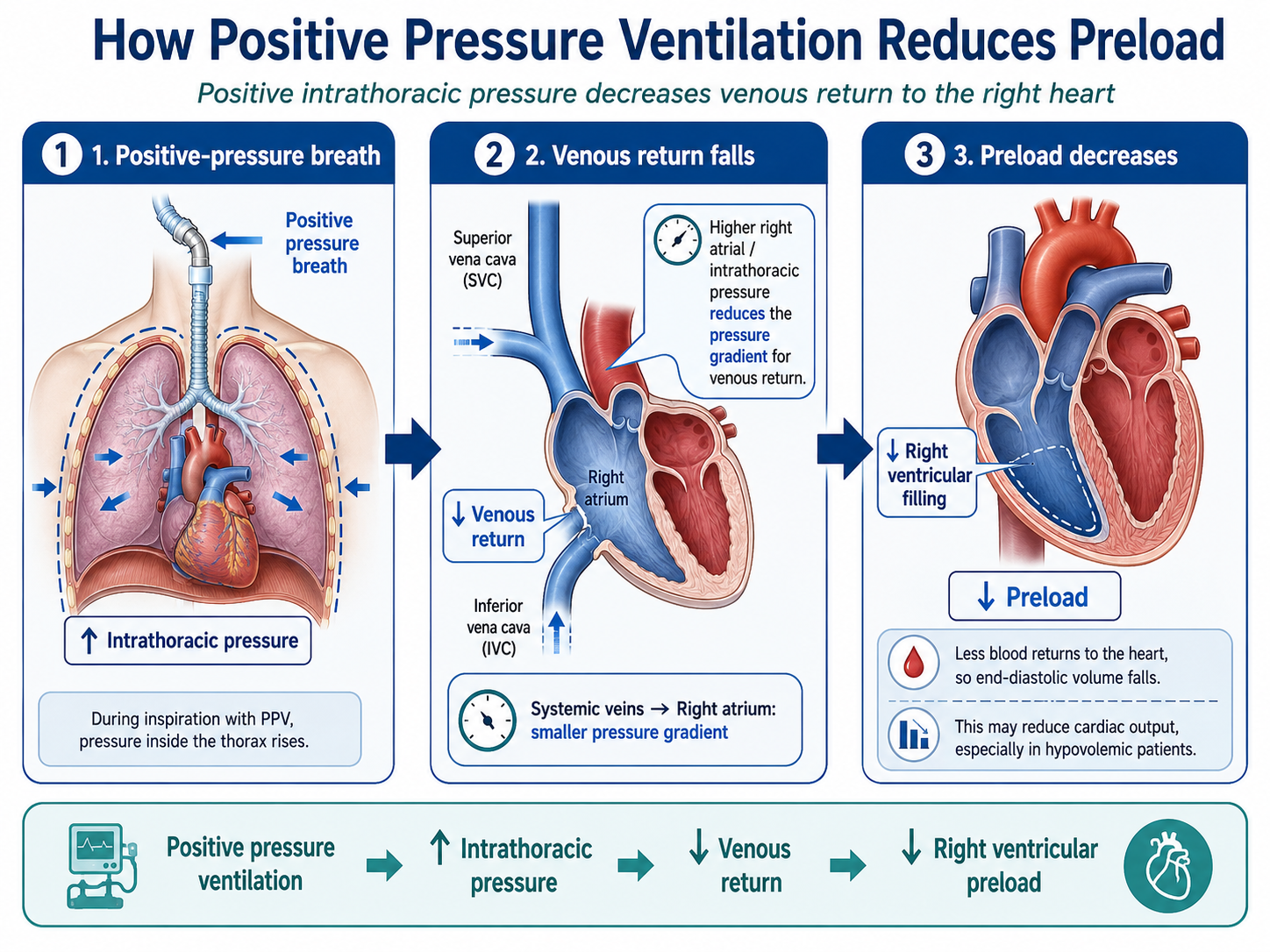
Now walk both tools over to patient two. That "high" pressure — or even the low one your shock patient is barely clinging to — may be the only thing perfusing their brain and coronaries. Nitro can pull that floor out from under them. And the same positive pressure that unloads an overwhelmed ventricle can harm a shock patient: by cutting venous return and bumping up the load on a struggling right ventricle, it can drop the output of a heart that had nothing to spare. NIV isn't banned in cardiogenic shock — a select, awake, cooperative patient may still benefit — but you apply it watchfully, you support the circulation alongside it, and you keep a much lower threshold to move to a tube, because failure here comes fast and hard.
The intubation you'll regret — and how NIV helps you dodge it
Here's the payoff of getting the mask right: the best way to survive a dangerous intubation is to not need one.
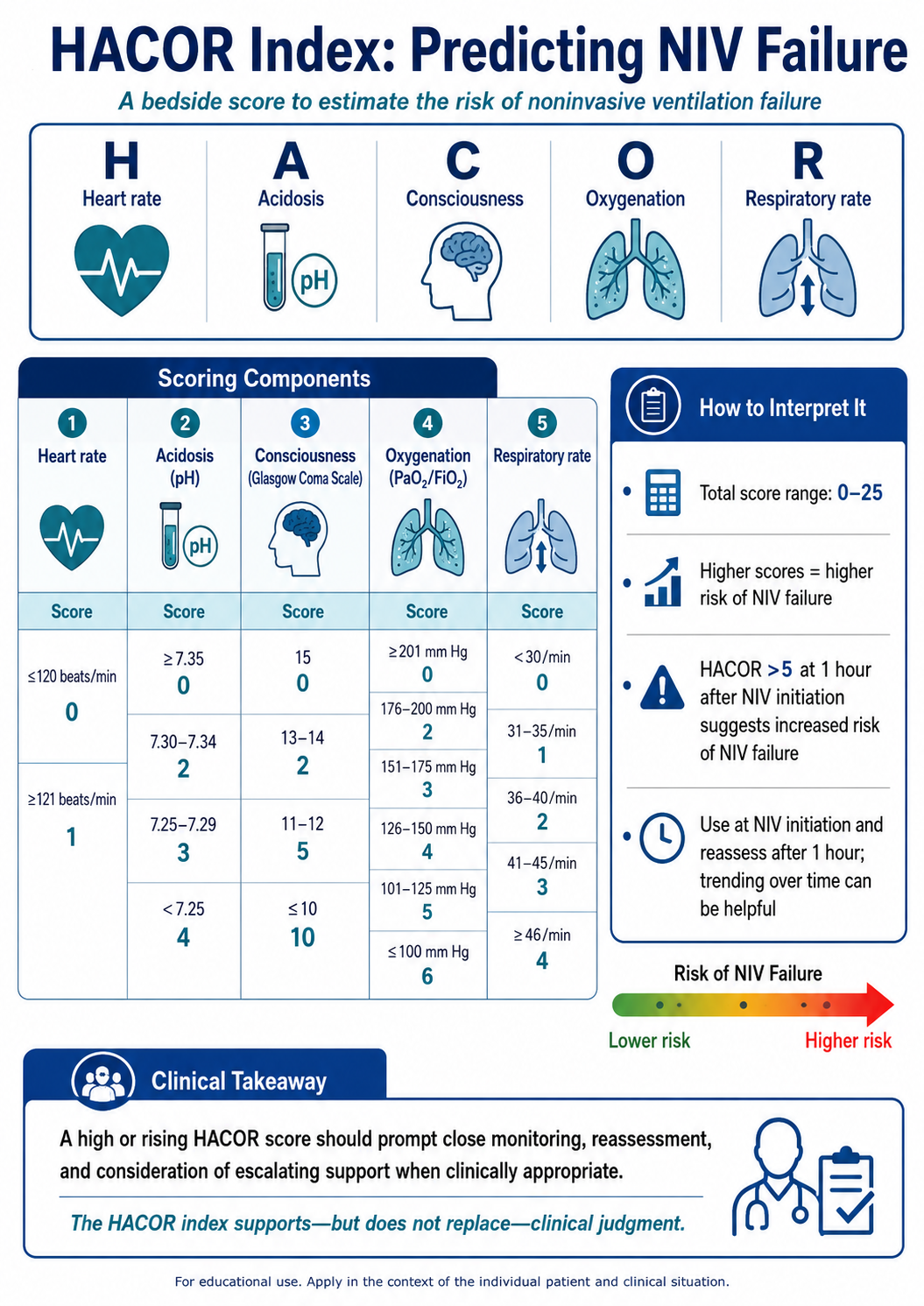
When a shock patient looks like they're "maintaining" — say, holding an 86/54 — they're often doing it on maximal endogenous adrenaline. Sedate them, kill that drive, add positive-pressure ventilation that chokes off venous return, and you can watch them slide from "stable" to PEA within a minute of the tube. Peri-intubation collapse shows up in more than 40% of emergency intubations, and the unstable patient is exactly who it hunts. So in SCAPE, well-run NIV that keeps a patient off the ventilator is doing lifesaving work. And when a shock patient does need the tube, resuscitate the circulation first — the ventilator is part of the resuscitation, not a step you do after it.
The one question that sorts it out
Strip away everything else, and every one of these patients comes down to a single question:
Is this patient drowning because the cardiovascular system is under too much pressure — or because the pump can no longer generate enough flow?
Warm, hypertensive, agitated, strong pulses? Think pressure. Think SCAPE. Mask on, unload hard.
Cool, hypotensive or "normotensive-but-wrong," confused, weak pulses, rising lactate? Think flow. Think shock. Protect perfusion before you touch a vasodilator — and respect what positive pressure can do to a failing pump.
The X-ray will look the same. The monitor will look the same. The distress will look the same. Your job is to see the circulation underneath the lungs — and to know exactly what that mask is doing to it.
Go deeper
If you want to actually own this — the physiology, the NIV strategy, CPAP versus BiPAP, the dosing, and the decision-making that keeps you from treating the wrong emergency — check out Managing Acute Pulmonary Edema with NIPPV, where I walk through it step by step with the reasoning behind every move.
Enroll in course here → https://learn.protectthelungs.com/products/courses/acpe-nippv